Stay Protected with our Diamond Club Membership
Tank vs Tankless Water Heaters for Montana Homes
Don't Wait...Call Hellgate
Choosing a water heater in Western Montana is a decision that requires more than just looking at a price tag. In the Missoula area and throughout the Bitterroot Valley, our plumbing systems face environmental stressors that homeowners in warmer climates never have to consider. Between the bone-chilling winters and our mineral-rich groundwater, the “right” choice between a traditional tank and a modern tankless system depends heavily on your household’s specific needs and the local conditions of your property.
In this blog, we will weigh the pros and cons of both technologies through the lens of the Big Sky Country. Both tanks and tankless units have specific service requirements to combat Montana’s hard water and cold temperatures. By evaluating your peak water demand and your long-term energy goals, you can select a system that provides reliable comfort even during the deepest freeze.
The Cold Ground Truth: Montana’s Incoming Water Temperatures
The biggest challenge for any Montana water heater is the temperature of the water coming from the ground. In Missoula, groundwater temperatures can drop to 40 degrees Fahrenheit or lower during the winter months. To reach a comfortable shower temperature of 120 degrees, your system must achieve a “thermal lift” of 80 degrees. This is a massive physical task that puts significant strain on the heating elements or burners. While a tankless unit in Florida only has to heat water by 40 degrees, a unit in Western Montana has to work twice as hard to produce the same result.
Because of this extreme temperature gap, your choice of equipment must be sized for the worst-case scenario. Regular water heater maintenance is the only way to ensure the burners or elements operate at peak efficiency, overcoming these frigid start-up temperatures. When considering thermal lift in Montana, keep these factors in mind:
- BTU Requirements: Recognizing that tankless units in our region need significantly higher BTU ratings to maintain a steady flow of hot water in winter.
- Flow Rate Diminishment: Understanding that a tankless unit that provides five gallons per minute in the summer may only provide three gallons per minute in February.
- Thermal Expansion Stress: Noting how the extreme temperature shift from 40 to 120 degrees causes pipes and tanks to expand and contract rapidly.
- Burner Modulation: Finding a unit that can precisely adjust its flame to handle both the mild groundwater of July and the icy water of January.
- Inlet Temperature Sensors: Ensuring your system has advanced sensors that can communicate with the gas valve to compensate for seasonal shifts.
- Heat Exchanger Integrity: Recognizing that high thermal lift puts more “heat stress” on the internal copper or stainless steel components.
- Condensation Challenges: Managing the increased amount of condensation created when hot exhaust gases meet the frigid air and water of a Montana winter.
For many Montana homes, a traditional tank provides a “buffer” that makes thermal lift less of an immediate struggle. However, with a properly sized, high-output tankless system, you can still enjoy modern efficiency without sacrificing your morning shower.
Performance in High-Demand Households
When deciding between a tank and a tankless system, you must consider your household’s peak-hour demand. In a traditional tank system, you have a pre-heated reservoir of water: usually 40 to 50 gallons, ready to go. Once that reservoir is depleted, you have to wait for the recovery time while the system heats a fresh batch. In contrast, a tankless system provides hot water on demand. While this technically means you will never run out, endless hot water is not the same as unlimited hot water.
In the Missoula area, the performance of these systems is tested under conditions where multiple fixtures are running at once. Because our incoming water is so cold, a tankless unit might struggle to provide enough volume for two simultaneous showers during a Montana cold snap. Proper water heater maintenance ensures that your flow sensors and mixing valves are calibrated to handle peak demand. To evaluate which system fits your lifestyle, consider these performance dynamics:
- Simultaneous Usage: Determining if your household frequently runs the dishwasher and the washing machine while someone is in the shower.
- Recovery Time Lag: Calculating how long a standard tank takes to reheat after a large soaking tub has been filled.
- Flow Rate Capacity: Matching the GPM or gallons per minute of a tankless unit to the total demand of your home’s high-flow fixtures.
- Consistency of Temperature: Noticing if your current system suffers from “cold water sandwiches” where the temperature fluctuates during a single use.
- Large Appliance Compatibility: Ensuring your system can meet the high-volume demands of modern, high-capacity laundry units.
- Guest Capacity: Planning for seasonal holidays when your home’s occupancy might double and put a strain on a limited tank.
- Distance to Fixture: Recognizing that a tankless unit located far from the master bath may still result in a long wait for hot water to arrive.
For a large family in the Bitterroot Valley, a high-capacity tank or a cascaded pair of tankless units is often the best solution. If you live alone or in a smaller home, a single tankless unit can provide all the hot water you need while taking up much less space.
Efficiency and the Long-Term Montana Winter
In a climate where the heating season can last for three quarters of the year, energy efficiency is a top priority for Missoula homeowners. Traditional tank water heaters suffer from what is known as standby heat loss. Because the tank must keep 40 to 50 gallons of water hot 24 hours a day, the burner or heating element cycles on frequently, even when no one is home. In the middle of a Montana winter, when your basement or utility room is naturally colder, the tank loses heat to the surrounding air even faster.
Tankless units eliminate this problem by only heating water when a faucet is turned on. This on-demand approach can reduce your energy consumption by up to 34 percent in homes that use moderate amounts of hot water. However, the efficiency of these units depends heavily on regular water heater maintenance to keep the heat exchanger free of mineral scale. Without a clean internal system, the unit will use significantly more gas to achieve the same temperature. To understand the efficiency landscape in the Big Sky region, consider these winter-specific factors:
- Standby Loss Mitigation: Evaluating how much energy is wasted keeping a large tank hot during the workday when the house is empty.
- Venting and Heat Exchange: Managing the high-efficiency condensing technology that requires specialized PVC venting to handle Montana’s freezing outdoor temperatures.
- Energy Source Availability: Choosing between high-efficiency natural gas burners and electric models based on the utility rates in your specific Missoula neighborhood.
- Internal Freeze Protection: Ensuring your tankless unit has built-in heaters to prevent the internal plumbing from freezing during a power outage or extreme cold snap.
- Modulating Gas Valves: Utilizing technology that can “turn down” the flame during the summer to save money when the incoming water is naturally warmer.
- Long Term Utility Savings: Calculating the “payback period” where the energy savings of a tankless unit eventually offset the higher initial installation cost.
- Scale and Efficiency: Recognizing that just 1/16th of an inch of mineral buildup on a heating element can increase energy costs by 15 percent.
While tankless units are the clear winners in raw efficiency, a well-insulated modern tank is still a highly effective and reliable choice for many Montana properties. The best decision depends on your long-term budget and your commitment to keeping the system tuned.
Space and Longevity: The Physical Footprint
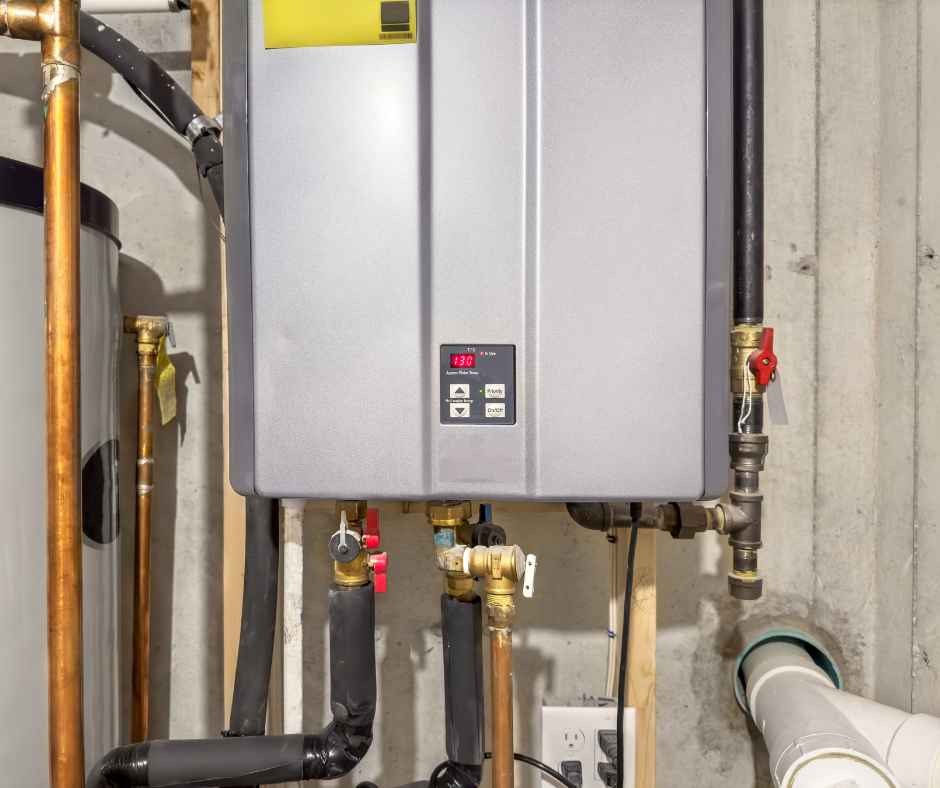
In Montana, the physical footprint of your plumbing equipment is often a deciding factor in choosing a tank or a tankless model. For homeowners in Missoula with smaller basements or those building compact mountain cabins, the space saved by a tankless unit can be transformative. A standard tankless unit is roughly the size of a small suitcase and mounts directly to the wall, freeing up valuable square footage for storage or other utilities. Conversely, a traditional 50-gallon tank requires a significant footprint and must sit on a sturdy, level floor.
When it comes to longevity, the difference is even more pronounced. A well-maintained tankless unit can last 20 years or more, while a traditional tank typically reaches the end of its reliable life after 10 to 12 years. However, this extended lifespan in Western Montana is entirely dependent on consistent water heater maintenance. Our mineral-rich water can quickly shorten the life of any system if it is not flushed regularly to remove scale. To understand how space and longevity impact your home, consider these factors:
- Reclaiming Floor Space: Eliminating the bulky footprint of a 50-gallon cylinder to allow for more organized utility rooms.
- Extended Operational Life: Doubling the expected service years of your investment by choosing a tankless design.
- Modular Repairability: Replacing individual components in a tankless unit rather than having to scrap the entire system when a leak occurs.
- Versatile Mounting Options: Installing your water heater in closets or pantries where a traditional tank would never fit.
- Flood Risk Mitigation: Reducing the chance of a massive 50-gallon leak in your basement because tankless units do not store standing water.
- Mineral Management: Recognizing that hard water buildup affects tankless units more quickly but is easier to clear through a professional flush.
- Future-Proofing the Home: Adding value to your property with a modern and long-lasting utility upgrade that appeals to future buyers.
Expert Guidance with Hellgate Plumbing, Heating & Cooling
Navigating the choice between tank and tankless technology in the Big Sky region requires a partner who understands the local environment. At Hellgate Plumbing, Heating & Cooling, we have spent years servicing the Missoula and Bitterroot Valley communities. We know that the right choice for your neighbor might not be the right choice for you. Our team provides professional sizing and transparent advice to ensure your home has a reliable source of hot water year-round. Beyond the installation, we are committed to your system’s health. Our comprehensive water heater maintenance plans are designed to address the specific challenges posed by Montana’s water chemistry and cold temperatures.
Whether you choose the high-efficiency performance of a tankless unit or the proven reliability of a traditional tank, we are here to ensure your investment lasts for years to come. Don’t wait for your current unit to fail during a winter storm. Contact us today to schedule an inspection and find the perfect hot water solution for your Montana home.
Get Assistance Today
Don't Wait... Call Hellgate
Responsive and reliable. Help when you need it most. Hellgate Plumbing, Heating and Cooling has provided residents of Missoula, Lolo, Florence, MT, and beyond with reliable and affordable HVAC and plumbing services for over 40 years.